Thus far we have looked at the question of succession from
the standpoint of who (singular) gets what. But there are
many examples in history where royal inheritance was split
between several heirs. This is known as Partible Inheritance.
the standpoint of who (singular) gets what. But there are
many examples in history where royal inheritance was split
between several heirs. This is known as Partible Inheritance.
Partible Inheritance
Partible Inheritance was a simple concept: every eligible
(usually male) heir received an equal portion of the
inheritance. It is a system that was particularity common
among the Germanic peoples of Europe but also present
among other ethnic groups as well.
The most famous example is probably the Kingdom of the
Franks and the later Carolingian Empire. Another example is
the Holy Roman Empire, which not coincidentally has its
origins in the Carolingian Empire.
(usually male) heir received an equal portion of the
inheritance. It is a system that was particularity common
among the Germanic peoples of Europe but also present
among other ethnic groups as well.
The most famous example is probably the Kingdom of the
Franks and the later Carolingian Empire. Another example is
the Holy Roman Empire, which not coincidentally has its
origins in the Carolingian Empire.
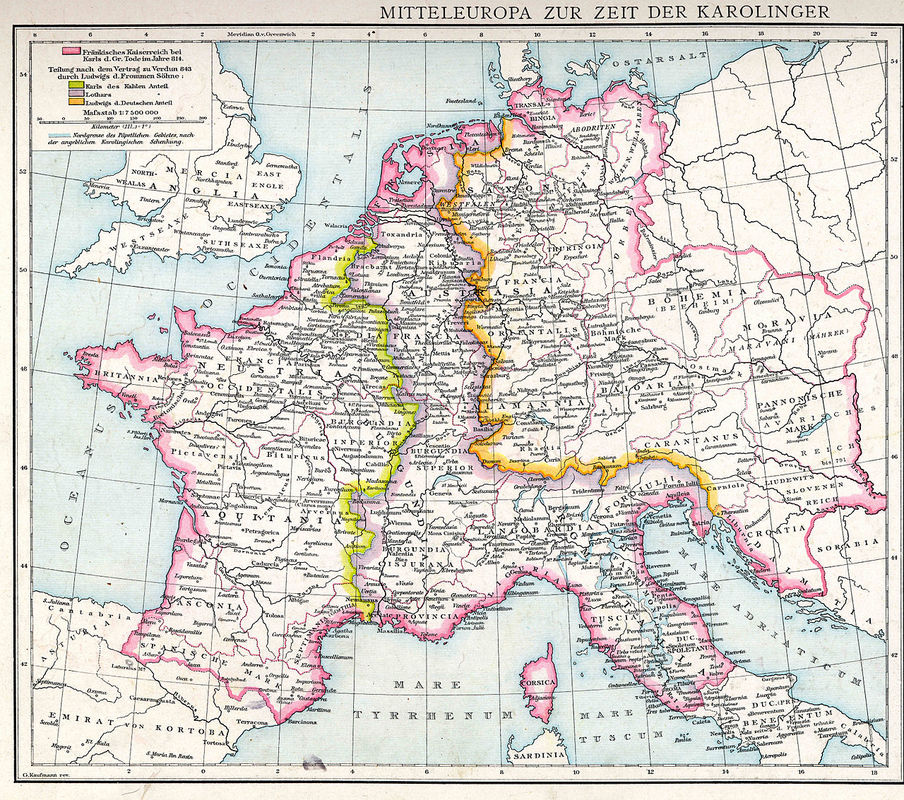
Division of the Carolingian Empire in 843
The system had several flaws which led to it being gradually
phased out as a form of succession. First and foremost it
added secure sources of men and resources to the rivalry
between siblings. Since all of the inheritors were of royal
blood it gave them all a claim to the throne. As a result open
warfare between the inheritors was not uncommon.
Added to this was the weakening of the state with each
division. The Holy Roman Empire suffered from this as while
the imperial dignity was not divisible, most of the imperial
territories were. It came to a point where the the southern
portion of modern day Germany was home to over 200 quasi-
independent states. All of which were ill-suited to defend
against potential invasion from France.
While Partible Inheritance largely became obsolete as the
default method of succession it was still used to deal with
unique situations as late as the 1500's. Emperor Charles V
through a quirk of Habsburg marital policies inherited the
Habsburg's Austrian lands, united crowns of Spain, and the
Burgundian Netherlands. Combined with the imperial title he
ruled a very powerful collection of territories. It turned out to
be difficult to govern however and Charles V eventually
decided to divide the territories between his two sons and
retire from political life.
phased out as a form of succession. First and foremost it
added secure sources of men and resources to the rivalry
between siblings. Since all of the inheritors were of royal
blood it gave them all a claim to the throne. As a result open
warfare between the inheritors was not uncommon.
Added to this was the weakening of the state with each
division. The Holy Roman Empire suffered from this as while
the imperial dignity was not divisible, most of the imperial
territories were. It came to a point where the the southern
portion of modern day Germany was home to over 200 quasi-
independent states. All of which were ill-suited to defend
against potential invasion from France.
While Partible Inheritance largely became obsolete as the
default method of succession it was still used to deal with
unique situations as late as the 1500's. Emperor Charles V
through a quirk of Habsburg marital policies inherited the
Habsburg's Austrian lands, united crowns of Spain, and the
Burgundian Netherlands. Combined with the imperial title he
ruled a very powerful collection of territories. It turned out to
be difficult to govern however and Charles V eventually
decided to divide the territories between his two sons and
retire from political life.
The French Appanage
The move from Partible Inheritance to Primogeniture was not
generally welcomed if you were a younger son. As such
compromises were often made when the switch occurred. In
France under the Capetian Dynasty this took the form of the
Appanages. These were lesser territories given to younger
sons with legal restrictions on what could be done with them.
Appanages could not be sold or lost in any way. Once the male
line of an Appanages went extinct the lands returned to the
French Crown. It was more or less effective in allowing the
French Monarchy to maintain family peace without
weakening the realm.
But even this system did not totally prevent the younger sons
(or their successors) becoming de facto independent. The
Dukes of Burgundy were often at war with the French
Monarch. The English benefited from an alliance with
Burgundy during the One Hundred Years War.
While Partible Inheritance is no longer used by any modern
monarchy its effect on history cannot be denied.
Loyally Yours,
A Kisaragi Colour
generally welcomed if you were a younger son. As such
compromises were often made when the switch occurred. In
France under the Capetian Dynasty this took the form of the
Appanages. These were lesser territories given to younger
sons with legal restrictions on what could be done with them.
Appanages could not be sold or lost in any way. Once the male
line of an Appanages went extinct the lands returned to the
French Crown. It was more or less effective in allowing the
French Monarchy to maintain family peace without
weakening the realm.
But even this system did not totally prevent the younger sons
(or their successors) becoming de facto independent. The
Dukes of Burgundy were often at war with the French
Monarch. The English benefited from an alliance with
Burgundy during the One Hundred Years War.
While Partible Inheritance is no longer used by any modern
monarchy its effect on history cannot be denied.
Loyally Yours,
A Kisaragi Colour
 RSS Feed