The Maple Monarchists
  • Blog
  • The Monarchy In Canada
    • The Canadian Royal Family
    • Vice-Regal Representatives
    • Arguments For Monarchy
    • The Crown & You
  • Special Projects
    • Discussion Topics >
      • Pan-Monarchism
      • Terms of Support
      • A Canadian Knighthood
      • Anarcho-Monarchism
      • Natural Government
    • Leadership Surveys
    • Letters >
      • Regarding Context Article
      • 2024 CanTrust Index
      • Contest Entry
    • Armorial of Haiti
  • Useful Links
  • Contact & Questions
    • About the Authors

Full Transcript of the King's Speech to Congress

4/30/2026

0 Comments

 
"Mr. Vice President, Mr. Speaker, members of Congress,
representatives of the American people across all states,
territories, cities and communities.

I would like to take this opportunity to express my particular
gratitude to you all for the great honour of addressing this
joint meeting of Congress and, on behalf of the queen and
myself, to thank the American people for welcoming us to the
United States to mark this semi-quincentennial year of the
Declaration of Independence.

And for all of that time, our destinies as nations have been
interlinked. As Oscar Wilde said, ‘We have really everything in
common with America nowadays except, of course, language.’

​Ladies and gentlemen, we meet in times of great uncertainty;
in times of conflict from Europe to the Middle East which
pose immense challenges for the international community
and whose impact is felt in communities the length and
breadth of our own countries.

We meet, too, in the aftermath of the incident not far from
this great building that sought to harm the leadership of your
nation and to foment wider fear and discord.

Let me say with unshakeable resolve: such acts of violence
will never succeed. Whatever our differences, whatever
disagreements we may have, we stand united in our
commitment to uphold democracy, to protect all our people
from harm, and to salute the courage of those who daily risk
their lives in the service of our countries.

Standing here today, it is hard not to feel the weight of history
on my shoulder — because the modern relationship between
our two nations and our own peoples spans not merely 250
years, but over four centuries. It is extraordinary to think that
I am the 19th in our line of sovereigns to study, with daily
attention, the affairs of America.

So, I come here today with the highest respect for the United
States Congress, this citadel of democracy created to
represent the voice of all American people to advance sacred
rights and freedoms.

Speaking in this renowned chamber of debate and
deliberation, I cannot help but think of my late mother, Queen
Elizabeth, who, in 1991, was also afforded this signal honour
and similarly spoke under the watchful eye of the Statue of
Freedom above us. Today I am here on this great occasion in
the life of our nations to express the highest regard and
fr
iendship of the British people to the people of the United
States.

As you may know, when I address my own Parliament at
Westminster, we still follow an age-old tradition and take a
member of Parliament ‘hostage,’ holding him or her at
Buckingham Palace until I am safely returned. These days, we
look after our ‘guest’ rather well – to the point that they often
do not want to leave. I don’t know, Mr. Speaker, if there were
any volunteers for that role here today?


As I look back across the centuries, Mr. Speaker, there emerge
certain patterns, certain self-evident truths from which we
can learn and draw mutual strength.


With the spirit of 1776 in our minds, we can perhaps agree
that we do not always agree – at least in the first instance.
Indeed, the very principle on which your Congress was
founded – no taxation without representation – was at once a
fundamental disagreement between us, and at the same time
a shared democratic value which you inherited from us.


Ours is a partnership born out of dispute, but no less strong
for it, so perhaps, in this example, we can discern that our
nations are in fact instinctively like-minded – a product of the
common democratic, legal and social traditions in which our
governance is rooted to this day.


Drawing on these values and traditions, time and again, our
two countries have always found ways to come together. And
by Jove, Mr. Speaker, when we have found that way to agree,
what great change is brought about – not just for the benefit
of our peoples, but of all peoples.

This, I believe, is the special ingredient in our relationship. As
President Trump himself observed during his state visit to
Britain last autumn, ‘The bond of kinship and identity
between America and the United Kingdom is priceless and
eternal. It is irreplaceable and unbreakable.’


This is by no means my first visit to Washington DC – the
capital of this great republic. It is in fact my 20th visit to the
United States, and my first as King and head of the
Commonwealth.

This is a city which symbolizes a period in our shared history,
or what Charles Dickens might have called ‘A Tale of Two
Georges’: the first President, George Washington, and my
five-times Great Grandfather, King George III. King George
never set foot in America and, please rest assured, I am not
here as part of some cunning rearguard action.

The Founding Fathers were bold and imaginative rebels with
a cause. Two hundred and fifty years ago, or, as we say in the
United Kingdom ‘just the other day,’ they declared
Independence. By balancing contending forces and drawing
strength in diversity, they united 13 disparate colonies to
forge a nation on the revolutionary idea of ‘life, liberty and the
pursuit of happiness.’ They carried with them, and carried
forward, the great inheritance of the British Enlightenment –
as well as the ideals which had an even deeper history in
English common law and Magna Carta.


These roots run deep, and they are still vital. Our Declaration
of Rights of 1689 was not only the foundation of our
constitutional monarchy, but also provided the source of so
many of the principles reiterated, often verbatim, in the
American Bill of Rights of 1791.


And those roots go even further back in our history: the U.S.
Supreme Court Historical Society has calculated that Magna
Carta is cited in at least 160 Supreme Court cases since 1789,
not least as the foundation of the principle that executive
power is subject to checks and balances.


This is the reason why there stands a stone, by the River
Thames at Runnymede where Magna Carta was signed in the
year 1215. This stone records that an acre of that ancient and
historic site was given to the United States of America by the
people of the United Kingdom, to symbolize our shared
resolve in support of liberty, and in memory of President
John F. Kennedy.


Distinguished members of the 119th Congress, it is here in
these very halls that this spirit of liberty and the promise of
America’s founders is present in every session and every vote
cast.

Not by the will of one, but by the deliberation of many,
representing the living mosaic of the United States. In both of
our countries, it is the very fact of our vibrant, diverse and
free societies that gives us our collective strength, including to
support victims of some of the ills that, so tragically, exist in
both our societies today.


And, Mr. Speaker, for many here – and for myself – the
Christian faith is a firm anchor and daily inspiration that
guides us not only personally, but together as members of our
community. Having devoted a large part of my life to
interfaith relationships and greater understanding, it is that
faith in the triumph of light over darkness which I have found
confirmed countless times.


Through it I am inspired by the profound respect that
develops as people of different faiths grow in their
understanding of each other. It is why it is my hope – my
prayer – that, in these turbulent times, working together and
with our international partners, we can stem the beating of
plowshares into swords.


I am mindful that we are still in the season of Easter, the
season that most strengthens my hope. It is why I believe,
with all my heart, that the essence of our two nations is a
generosity of spirit and a duty to foster compassion, to
promote peace, to deepen mutual understanding and to value
all people, of all faiths, and of none.


The alliance that our two nations have built over the
centuries, and for which we are profoundly grateful to the
American people, is truly unique. And that alliance is part of
what Henry Kissinger described as Kennedy’s ‘soaring vision’
of an Atlantic partnership based on twin pillars: Europe and
America. That partnership, I believe Mr. Speaker, is more
important today than it has ever been.


The first reigning British sovereign to set foot in America was
my grandfather, King George VI. He visited in 1939 with my
beloved grandmother, Queen Elizabeth the Queen Mother.
The forces of fascism in Europe were on the march, and some
time before the United States had joined us in the defence of
freedom. Our shared values prevailed.


Today, we find ourselves in a new era, but those values
remain.


It is an era that is, in many ways, more volatile and more
dangerous than the world to which my late mother spoke, in
this chamber, in 1991.


The challenges we face are too great for any one nation to bear
alone. But in this unpredictable environment, our alliance
cannot rest on past achievements, or assume that
foundational principles simply endure. As my Prime Minister
said last month: ‘ours is an indispensable partnership. We
must not disregard everything that has sustained us for the
last eighty years. Instead, we must build on it.’


Renewal today starts with security. The United Kingdom
recognizes that the threats we face demand a transformation
in British defence.


That is why our country, in order to be fit for the future, has
committed to the biggest sustained increase in defence
spending since the Cold War – during part of which, over 50
years ago, I served with immense pride in the Royal Navy,
following in the naval footsteps of my father, Prince Philip,
Duke of Edinburgh; my grandfather, King George VI; my
great uncle, Lord Mountbatten; and my great grandfather,
King George V.


This year, of course, also marks the 25th anniversary of 9/11.
This atrocity was a defining moment for America and your
pain and shock were felt around the whole world. During my
visit to New York, my wife and I will again pay our respects to
the victims, the families, and the bravery shown in the face of
terrible loss. We stood with you then. And we stand with you
now in solemn remembrance of a day that shall never be
forgotten.


In the immediate aftermath of 9/11, when NATO invoked
Article Five for the first time, and the United Nations Security
Council was united in the face of terror, we answered the call
together – as our people have done so for more than a
century, shoulder to shoulder, through two World Wars, the
Cold War, Afghanistan and moments that have defined our
shared security.


Today, Mr. Speaker, that same, unyielding resolve is needed
for the defence of Ukraine and her most courageous people. It
is needed in order to secure a truly just and lasting peace.
From the depths of the Atlantic to the disastrously melting
icecaps of the Arctic, the commitment and expertise of the
United States Armed Forces and its allies lie at the heart of
NATO, pledged to each other’s defence, protecting our
citizens and interests, keeping North Americans and
Europeans safe from our common adversaries.


Our defence, intelligence and security ties are hard-wired
together through relationships measured not in years, but in
decades.


Today, thousands of U.S. service personnel, defence officials
and their families are stationed in the United Kingdom, as
British personnel serve with equal pride across 30 American
states. We are building F-35s together. And we have agreed
the most ambitious submarine program in history, AUKUS, in
partnership with Australia, a country of which I am also
immensely proud to serve as sovereign.

We do not embark on these remarkable endeavors together
out of sentiment. We do so because they build greater shared
resilience for the future, so making our citizens safer for

generations to come.

Our common ideals were not only crucial for liberty and
equality, they are also the foundation of our shared
prosperity. The rule of law: the certainty of stable and
accessible rules, an independent judiciary resolving disputes
and delivering impartial justice. These features created the
conditions for centuries of unmatched economic growth in
our two countries. This is why our governments are
concluding new economic and technology agreements – to
write the next chapter of our joint prosperity and ensure that
British and American ingenuity continues to lead the world.


Our nations are combining talent and resources in the
technologies of tomorrow: our new partnerships in nuclear
fusion and quantum computing, and in AI and drug
discovery, holding the promise of saving countless lives.


More broadly, we celebrate the 430 billion dollars in annual
trade that continues to grow, the 1.7 trillion dollars in mutual
investment that fuels that innovation, and the millions of jobs
on both sides of the Atlantic supported across both
economies. These are strong foundations on which to
continue to build, for generations yet unborn.


Our ties in education, research, and cultural exchange
empower citizens and future leaders of both countries.


The Marshall Scholarship, named after the great General
George Marshall, and the Association of which I am so proud
to be patron, are emblematic of the connection between our
two countries.


Since its founding, more than 2,300 scholarships have been
awarded, opening doors for Americans from all walks of life to
study at the United Kingdom’s leading universities.


So as we look toward the next 250 years, we must also reflect
on our shared responsibility to safeguard nature, our most
precious and irreplaceable asset.


Millennia before our nations existed, before any border
drawn, the mountains of Scotland and Appalachia were one, a
single, continuous range, forged in the ancient collision of
continents.


The natural wonders of the United States of America are
indeed a unique asset, and generations of Americans have
risen to this calling: indigenous, political and civic leaders,
people in rural communities and cities alike, have all helped
to protect and nurture what President Theodore Roosevelt
called ‘the glorious heritage’ of this land’s extraordinary
natural splendor, on which so much of its prosperity has
always depended.


Yet even as we celebrate the beauty that surrounds us, our
generation must decide how to address the collapse of critical
natural systems which threatens far more than the harmony
and essential diversity of nature. We ignore at our peril the
fact that these natural systems, in other words, nature’s own
economy, provide the foundation for our prosperity and our
national security.


The story of the United Kingdom and the United States is, at
its heart, a story of reconciliation, renewal and remarkable
partnership.


From the bitter divisions of 250 years ago, we forged a
friendship that has grown into one of the most consequential
alliances in human history.


I pray with all my heart that our alliance will continue to
defend our shared values, with our partners in Europe and the
Commonwealth, and across the world, and that we ignore the
clarion calls to become ever more inward-looking.


Mr. Speaker, Mr. Vice-President, distinguished ladies and
gentlemen, America’s words carry weight and meaning, as
they have since Independence.


The actions of this great nation matter even more.

President Lincoln understood this so well, with his reflection
in the magisterial Gettysburg Address that the world may
little note what we say, but will never forget what we do.


And so, to the United States of America, on your 250th
birthday, let our two countries rededicate ourselves to each
other in the selfless service of our peoples and of all the
peoples of the world.


God bless the United States and God bless the United
Kingdom."

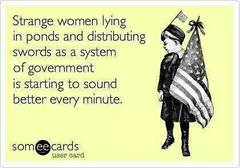
It has been interesting watching the response to the King's speech. My favourite is below as I think it sums things up nicely;
Picture
Loyally Yours,
A Kisaragi Colour
0 Comments

The Declaration of Dependence

1/12/2019

 
Picture
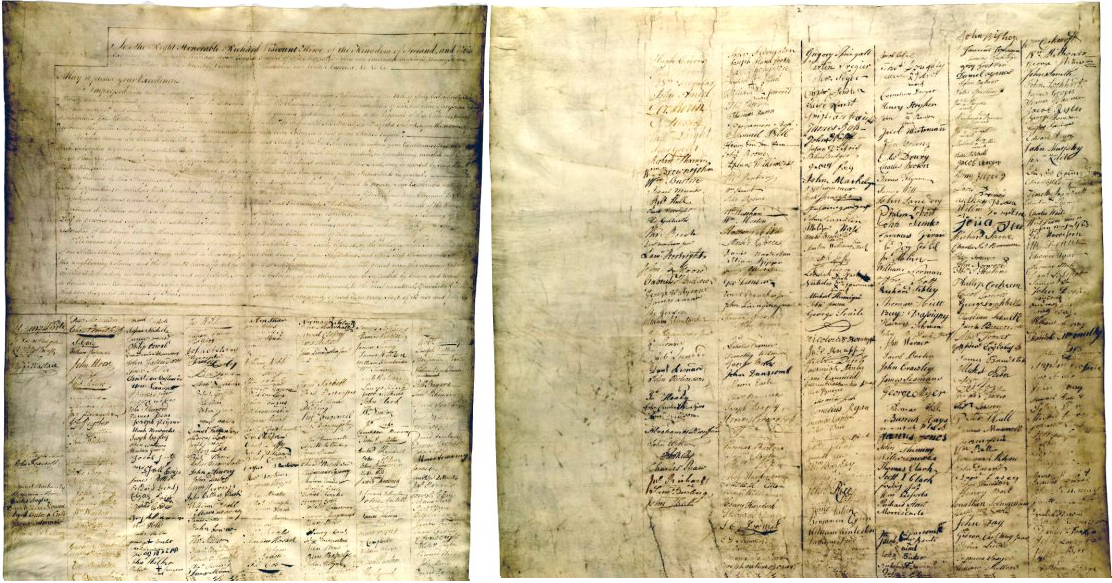
Photo Credit: Journal of the American Revolution
Faded cursive writing on a wrinkled, water-damaged sheet of
paper is all that remains of an important counter-point to the
Declaration of Independence. The document is known as the
Loyalist Declaration of Dependence and it was penned
in 1776 in New ​York. A transcript of the text is as follows:
"To the Right Honorable Richard Viscount Howe, of the Kingdom of Ireland, and
His Excellency The Honorable William Howe, Esquire, General of His Majesty’s
Forces in America, the Kings’ Commissioners for restoring Peace in His Majesty’s
Colonies and Plantations in North America &c. &c. &c.

May it please your excellencies.
Impressed with the most grateful sense of the Royal Clemency, manifested I you
Proclamation of the 14th. Of July last, whereby His Majesty hath been graciously
pleased to declare, “That he is desirous to deliver His American subjects from the
calamities of War, and other oppressions, which they now undergo:” and equally
affected with sentiments of gratitude for the generous and humane attention to the
disposition “to confer with His Majesty’s well affected subjects, upon the means of
restoring the public Tranquility, and establishing a permanent union with every
Colony as a part of the British Empire.”
We whose names are hereunto subscribed, Inhabitants of the City and County of
New-York, beg leave to inform your Excellencies: that altho most of us have
subscribed a general Representation with many other of the Inhabitants; yet we
wish that our conduct, in maintaining inviolate our loyalty to our Sovereign,
against the strong tide of oppression and tyranny, which has almost overwhelmed
this Land, may be marked by some line of distinction, which cannot well be drawn
from the mode of Representation that has been adopted for the Inhabitants in
general.
Influenced by this Principle, and from a regard to our peculiar Situation, we have
humbly presumed to trouble your Excellencies with the second application; in
which, we flatter ourselves, none participate but those who have ever, with
unshaken fidelity, borne true Allegiance to His Majesty, and the most warm and
affectionate attachment to his Person and Government. That, notwithstanding the
tumult of the times, and the extreme difficulties and losses to which many of us
have been exposed, we have always expressed, and do now give this Testimony of
our Zeal to preserve and support the Constitutional Supremacy of Great Britain
over the Colonies; and do most ardently wish for a speedy restoration of that union
between them, which, while it subsisted, proved the unfailing source of their mutual
happiness and prosperity.
We cannot help lamenting that the number of Subscribers to this Address is
necessarily lessened, by the unhappy circumstance that many of our Fellow
Citizens, who have firmly adhered their loyalty, have been driven from their
Habitations, and others sent Prisoners into some of the neighbouring Colonies: and
tho’ it would have afforded us the highest satisfaction, could they have been present
upon this occasion: yet we conceive it to be the duty we owe to ourselves and our
prosperity, whilst this testimony of our Allegiance can be supported by known and
recent facts, to declare to your Excellencies; that so far from having given the last
countenance or encouragement, to the most unnatural, unprovoked Rebellion, that
ever disgraced the annuls of Time; we have on the contrary, steadily and uniformly
opposed it, in every stage of its rise and progress, at the risque of our Lives and
Fortunes."
547 signed the document and they came from all walks of life.
The only common thread between them being a wish to
express their loyalty in some way. Some of the signers are
known to have joined Loyalist regiments later in the war but
​for many this would be their only chance to show their loyalty.

After the names there is a short concluding section that has
been partially obscured:
We, Richard Hoyt Thomas T . . . ing and Frederick Hudson . . . of New York do
hereby certify that we attended the signing . . . and that the subscribers have
voluntarily signed their names.
Twenty Eight day of November in the Seventeenth Year of His Majesty.
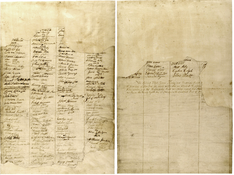
PictureWater-damaged pages
The signing took place at the
Queen's Head Tavern which was
across the street from the town
hall. Presumably this was so the
document could be submitted
immediately afterwards. Or
perhaps they needed some place
with more space. Or perhaps
they just thought the tavern had
the right name for such an ​event. Whatever the reason the
document is an important glimpse into the ranks of those who
chose to remain loyal to their king during the revolution.

Loyally Yours,
A Kisaragi Colour
Meme Monday #2

10/8/2018

 
Picture
Picture
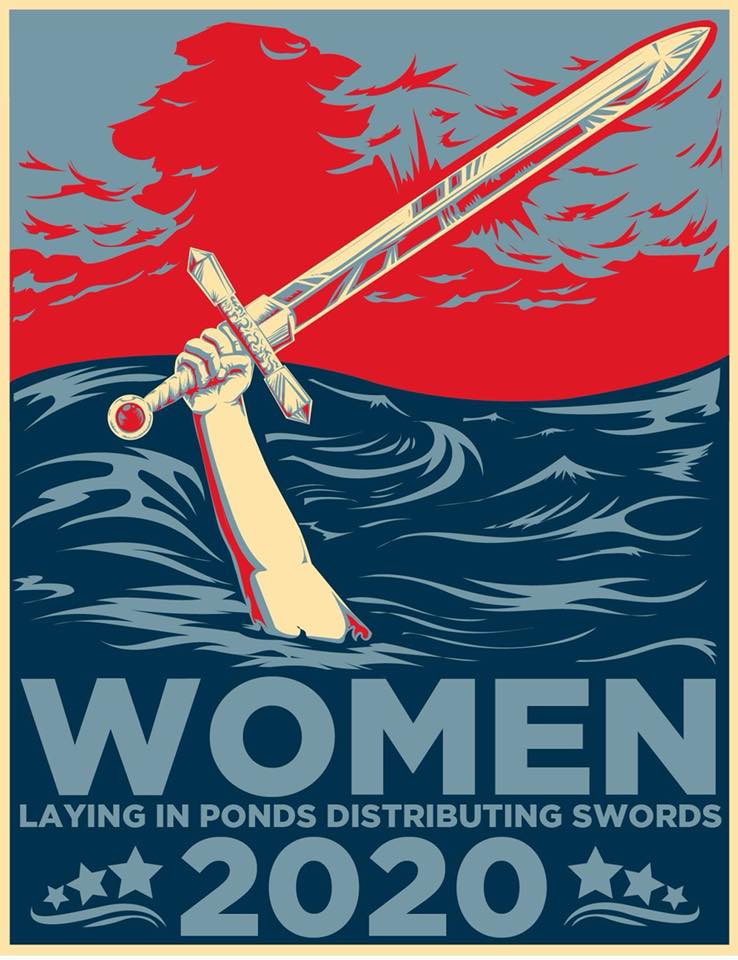
Two memes I found that put a
new twist on the legend of King
Arthur. There is a high level of
discontent with American-style
democracy and the number of
monarchists in the USA is
surprisingly high (given their
founding mythology).

Loyally Yours,
A Kisaragi Colour
Emperor Pedro II's 1876 Visit to Canada

9/20/2018

 
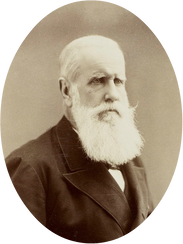
PictureEmperor Pedro II
Brazil was once an empire. And in
terms of economic, military, and social
​development it ranks as a golden age of
that country. Embodying this period of
progress was Emperor Pedro II (who I
will need to write a full profile of at
some point). Between suppressing the
slave trade, and eventually abolishing
it, he was also an ardent patron of the
arts and sciences. This would lead
Charles Darwin to comment, "The
Emperor does so much for science, that
every scientific man is bound to show him the utmost
respect
". He was also somewhat curious about Canada.

The Emperor's
 attention would first turn to Canada in 1866
when the colonies of British North America sent a trade
mission to Brazil. At the time only Nova Scotia had any direct
trade with the country. When the trade delegation met with
the Emperor he questioned them about the future of the
Dominion of Canada, Montreal's Victoria Bridge, railways,
canals, the Canadian climate, agriculture and other topics.
Despite the warm welcome from the Emperor no agreement
for free trade between the Empire of Brazil and the future
Canadian Dominion was forthcoming. Back in Canada the
trade delegation concluded that the Canadian market was too
​small to develop direct trade with Brazil.

​In 1876 the Emperor embarked on a state visit to the United
States and Europe with a delegation that included members of
his family and court. His goals for the US leg of the trip was to

learn more about the country, improve economic ties, and
attend the Philadelphia Centennial Exhibition. He would
then proceed onto the European leg of his trip.

The Visit

The trip to Canada had an unofficial character and occurred
between the Emperor's arrival in the United States and his
​appearance at Philadelphia Centennial Exhibition. He
​crossed into Canada at Niagara Falls and on June 5th made
his way by train to Hamilton and Kingston. Apparently, his
arrival caused a fair amount of curiosity and his train car was
often surrounded by locals when it arrived at each station.
When the train arrived in Toronto the mayor of the city went
down to the train station and, after being granted an
audience, requested the Emperor stay and enjoy the
hospitality of the city. This offer was refused as he had already
made plans to head on to Montreal. At some point after
arriving in Canada the Governor General learned of the
Emperor's visit and sent his respects. 

On June 6th the Emperor departed for Montreal on the ship
Spartan. About one hundred people were on the Kingston
wharf to see him off. It is reported that the Emperor could
not be distinguished among the other passengers as a group
of men were inquiring about his travels and he in turn was
asking many questions about Canada. The captain of the
Spartan was unaware of his special passenger as the Emperor
had not allowed word to be sent ahead.

Upon arriving at Montreal the Emperor was the "recipient of
many cheers, which lasted until he entered a carriage, when
he responded by raising his hat
". That evening the Emperor
went to the Academy of Music where he was received
warmly. June 7th had an intense schedule (for an unofficial
visit). He started at the Notre Dame Cathedral and then went
to Bonsecours Market at around 7am. The Emperor spent
some time examining the meat and poultry. This astonished
the butchers as they could not believe a living emperor would
visit their stalls, and at such an early hour in the morning.
Afterwards the Emperor visited many places in Montreal
including Bonsecours Church, Mount Royal, the Deaf and
Dumb Institute, the Natural History Museum, and McGill
College.

A Canadian Friend

On June 8th the Emperor decided not to proceed on his
planned trip to Quebec City due to the poor health of the
Empress. It had been a good trip and the Emperor was left
with a positive impression of Canada. He is recorded to have
commented on the superiority of the Canadian political
system in comparison to the American system. But no closer
trade ties developed from this trip.

The imperial delegation made their way slowly back
​to 
​Philadelphia where the Emperor officially opened the
​exhibition with President Ulysses S. Grant and joined by
another man they served as judges of the various scientific
exhibits present. At this exhibition was noted Canadian
inventor Alexander Graham Bell who was demonstrating his
newest invention; the telephone. The two men had met at
in Boston at an earlier date. It is fortunate that the Emperor
remembered him as the judges for the exhibition were about
to adjourn without having examined Mr. Bell's exhibit.
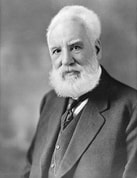
PictureAlexander Graham Bell
The Emperor insisted the judges see it. The
Emperor held the receiver up to his ear as
Mr. Bell recited a few lines of Shakespeare.
The Emperor exclaimed "It talks!" and it
made a great impression on the other
judges as well. It is impossible to say how
this chance meeting affected the future
prospects of the telephone but a mere 14
years later the Empire would have its first
telephone company. The Emperor and Mr. Bell would
continue to write each other and become friends.

Ultimately, the Emperor's visit to Canada would be forgotten
and it would not be until World War Two that the two
countries began seeking closer economic ties.

Loyally Yours,
A Kisaragi Colour

In the Wake of Trump the Benefits of Monarchy are not as Tough to Argue

11/11/2016

 
By now everyone knows that Donald Trump is the president-elect of the United States. The 2016 election campaign was an
unprecedented display of division, hate, classism, and sheer
stupidity. Its smoldering remains will not be easily cleaned
up and some have already predicted that it may take several
election cycles for the damage to the American body politic to
be repaired. This assumes that future election campaigns can
manage to be unifying affairs. I wouldn't hold my breathe on
that happening if I were you.
Picture
This entire situation led to an interesting
article being published in the New York
Times asking if it was time for America
​to become a constitutional monarchy. I
would of course answer 'yes' to that
question. But many progressives have
been far less likely to say the same. And
now it would appear that at least a few of
them would now answer the same as me.
​This is a good start.

I have argued before that the progressive's aversion to
monarchy doesn't make a whole lot of sense. Monarchy is a
positive institution for progressives as much, if not more, than
conservatives.

Not all responses to the New York Times article have been as
positive as mine. The Mad Monarchist accuses the author of
supporting monarchy for the wrong reasons. There is
some merit to this charge but I don't think it is a major issue.
Instead we should consider that progressives have been dead
set against monarchy for years and now they are starting to
waver.
Picture
After Trump was elected another
article appeared in The Guardian
comparing the British Monarchy
​favourably to the American system.
The Guardian is an anti-monarchy
paper in Britain which makes this
article pretty surprising.

Over the next four years there will be some that say the next
president will be better. But in a divided nation that is not at
all likely. After Obama was elected there were calls for some
states to leave the union. 'Moving to Canada' is also not an
idea that started with this election. And even if the president
is good on a policy level the division remains. This goes back
to the incompatibility of the roles of head of government and
head of state in a presidential system.

Perhaps in time 'God bless America' will be followed by 'God
save the Queen'.

Loyally Yours,
A Kisaragi Colour

    About

    This website is intended to be a resource for those arguing in favour of Canada's monarchy, researching Canada's royal past, or wondering what the various vice-regal representatives of the Canadian Crown are up to currently. As well, articles about other monarchies may appear from time to time. 

    Archives

    April 2026
    March 2026
    February 2026
    January 2026
    December 2025
    November 2025
    October 2025
    September 2025
    August 2025
    July 2025
    June 2025
    May 2025
    April 2025
    March 2025
    February 2025
    January 2025
    December 2024
    November 2024
    October 2024
    September 2024
    August 2024
    July 2024
    June 2024
    May 2024
    April 2024
    March 2024
    February 2024
    January 2024
    December 2023
    November 2023
    October 2023
    September 2023
    August 2023
    July 2023
    June 2023
    May 2023
    April 2023
    March 2023
    February 2023
    January 2023
    December 2022
    November 2022
    October 2022
    September 2022
    August 2022
    July 2022
    June 2022
    May 2022
    April 2022
    March 2022
    February 2022
    January 2022
    December 2021
    November 2021
    October 2021
    September 2021
    August 2021
    July 2021
    June 2021
    May 2021
    April 2021
    March 2021
    February 2021
    January 2021
    December 2020
    November 2020
    October 2020
    September 2020
    August 2020
    July 2020
    June 2020
    May 2020
    April 2020
    March 2020
    February 2020
    January 2020
    December 2019
    November 2019
    October 2019
    September 2019
    August 2019
    July 2019
    June 2019
    May 2019
    April 2019
    March 2019
    February 2019
    January 2019
    December 2018
    November 2018
    October 2018
    September 2018
    August 2018
    July 2018
    June 2018
    May 2018
    April 2018
    March 2018
    February 2018
    January 2018
    December 2017
    November 2017
    October 2017
    September 2017
    August 2017
    July 2017
    June 2017
    May 2017
    April 2017
    March 2017
    February 2017
    January 2017
    December 2016
    November 2016
    October 2016
    September 2016
    August 2016
    July 2016
    June 2016
    May 2016
    April 2016
    March 2016
    February 2016
    January 2016
    December 2015
    November 2015
    October 2015
    September 2015
    August 2015
    July 2015
    June 2015
    May 2015
    April 2015
    March 2015
    February 2015
    January 2015
    December 2014
    November 2014
    October 2014
    September 2014
    August 2014
    July 2014
    June 2014
    May 2014

    Categories

    All
    Afghanistan
    Aga Khan I
    Aga Khan II
    Aga Khan III
    Aga Khan IV
    Alberta
    Albert County
    Alexandra Mendès
    Alistair MacGregor
    Allison Lawlor
    Alt History
    Amita Kuttner
    Andrew Saxton
    Andrew Scheer
    Annamie Paul
    Archduke Franz Ferdinand
    Aria David
    Aron Seal
    Artwork
    Australian Monarchy
    Austria
    Barbados
    Barry MacKenzie
    Bloc Quebecois
    Blog Update
    Books
    Brad Trost
    Brazil
    Brian Graff
    British Columbia
    British Monarchy
    Canada Day
    Canada Post
    Canadian Monarchist News
    Canadian Monarchy
    CANZUK International
    Caribbean Monarchist League
    Carolingian Empire
    Carolyn Harris
    Cathy Bursey-Sabourin
    CFP
    Chandra Arya
    Charity
    Charlie Angus
    Charter Of Rights And Freedoms
    Chief Edward Machimity
    Chief John Thunder
    Chief Robert Joseph
    Chris Alexander
    Christian Bjørnskov
    Christmas
    Christ The King
    Citizenship Oath
    Clamavi De Profundis
    Commonwealth
    Communists
    Confederation
    Conservative Party
    Coronation
    Coronation Oath
    Costs Of The Crown
    Cricket
    Crown Jewels (of Canada)
    Crown Society Of Canada
    Dalton Camp
    David Johnson
    David Merner
    Deepak Obhrai
    Democracy
    Democracy Watch
    Denmark
    Derek Sloan
    Dominic Cardy
    Donald Booth
    Donald Trump
    Doug Ford
    Dr. Leslyn Lewis
    Duchess Of Cambridge
    Duchess Of Hohenberg
    Duke Of Cambridge
    Dylan Mainprize
    Dylan Perceval Maxwell
    Education
    Elizabeth May
    Elsie Wayne
    Emma Dent Coad
    Emperor Charles V
    Emperor Francis II
    Emperor Kangxi
    Emperor Nero
    Emperor Pedro II
    Emperor Qianlong
    English Monarchy
    Erin O'Toole
    FCP
    Fiji
    Frank Baylis
    French Monarchy
    Gaming
    George Stanley
    Glorious Revolution
    Government House
    Governor General
    Gov Gen. Adrienne Clarkson
    Gov Gen. David Johnston
    Gov Gen. Julie Payette
    Gov Gen. Mary Simon
    Grand Chief Henri Membertou
    Green Party
    Grenadian Monarchy
    GTA Branch
    Hawaii
    Heraldry
    Hitler
    Hockey
    Holy Roman Empire
    Homewards
    Hudson's Bay Company
    Ibrahim Bruno El-Khoury
    Interview
    Invictus Games
    Iran
    ISCC
    Jack Layton
    Jacques Monet
    Jagmeet Singh
    Jamaica
    James Hawkes
    Jean Charest
    Jody Wilson-Raybould
    John A. Macdonald
    John Boyko
    Jordan
    J.R.R. Tolkien
    Judy Green
    Julienne Bay
    Justin Trudeau
    Kathleen Wayne
    Kellie Leitch
    Kevin Gillespie
    King Alfonso XI
    King Carl XVI
    King Charles I
    King Charles II
    King Charles III
    King Charles XI
    King Christian IV
    King Edward I
    King Edward VII
    King Edward VIII
    King George I
    King George V
    King George VI
    King Henry VIII
    King James VI & I
    King Juan Carlos I
    King Louis XIV
    King Louis XVI
    King Matthias Corvinus
    King's Counsel
    King William IV
    King Zahir Shah
    Kisaragi
    Labour Party
    Leona Alleslev
    Letters Patent
    Liberal Party
    Lisa LaFlamme
    Lisa Raitt
    Lord Ludichris
    Loyalists
    Lt. Gov. Brenda Murphy
    Lt. Gov. Elizabeth Dowdeswell
    Lt. Gov. Graydon Nicholas
    Lt. Gov. Jocelyne Roy Vienneau
    Lt. Gov. John Graves Simcoe
    Lt. Richard Wilson
    Mackenzie King
    Magnum Concilium
    Marilyn Gladu
    Mark Steyn
    Mary Lincoln
    Maxime Bernier
    Meme
    Meryam Haddad
    Michael Chong
    Michael Valpy
    Mike Holland
    Mi'kmaw
    Mirrors For Princes
    Mohawks
    Monarchist League Of Canada
    Monarchist League Of Grenada
    Morocco
    Mr. Windsor
    Native Kingship
    Nawanagar
    NDP
    Neil MacAlasdair
    Netherlands
    New Brunswick
    Newfoundland
    News
    New Year's Levee
    New York
    New Zealand
    Normandy
    Nova Scotia
    Oath Of Allegiance
    Olympics
    Omoba Aina
    Ontario
    PACT
    Papua New Guinean Monarchy
    Parliament
    Pat Stogran
    PEI
    People's Alliance
    People's Party
    Peter Julian
    Peter Kurrild-Klitgaard
    Peter MacKay
    Peter Russell
    Peter Stoffer
    Philippe Lagasse
    Pierre Elliott Trudeau
    Pierre Lemieux
    Playlist
    Pope Boniface VIII
    Prime Minister
    Prince Albert
    Prince Andrew
    Prince Arthur
    Prince Charles
    Prince Edward
    Prince Ermias Sahle Selassie
    Prince Felipe
    Prince George
    Prince Harry
    Prince Philip
    Prince Reza Pahlavi
    Prince Rupert
    Princess Anne
    Princess Louise
    Prince Victor
    Prince William
    Profiles
    Progressive Bloggers
    Progressivism
    Quebec
    Queen Anne
    Queen Elizabeth I
    Queen Elizabeth II
    Queen's Counsel
    Queen Victoria
    Quotes
    Randall Garrison
    R.B. Bennett
    Referendum
    Religion
    Remembrance Day
    Republicans
    Restoration
    Richard Bassett
    Rick Peterson
    Right To Be Consulted
    Right To Encourage
    Right To Warn
    Rob Ashton
    Robert Finch
    Robert Pichette
    Robertson Davies
    Rob Moore
    Romana Didulo
    Rome
    Royal 22nd Regiment
    Royal Anthems
    Royal Christmas Message
    Royal Jubilee
    Royal St. John's Regatta
    Royal Tour
    Royal Warrant
    Saskatchewan
    Saudi Arabia
    Science
    Scott Aitchison
    Scott Morrison
    Sir David Kirke
    Sir Samuel Leonard Tilley
    Six Nations
    Social Media
    Stephen Harper
    St. John's
    Succession
    Sultan Alauddin Riayat Shah
    Supreme Court Of Canada
    The Ceremonial Guard
    The Constitution
    The Enlightenment
    The Mad Monarchist
    The Phoenix Project
    Tim Besley
    Timeline
    Tim Thompson
    Tom Freda
    Tom Mulcair
    Tony Abbott
    Tony Clement
    Tony McQuail
    Top 10 List
    United States
    Victoria Day
    Viscount Monck
    Wallis Simpson
    Walter Bagehot
    Wet'suwet'en
    Winston Churchill
    W. L. Morton
    Young Monarchists
    Yukon
    Yves Engler
    Yves-François Blanchet
    Zahedi Center

    RSS Feed

    Picture
    Proud Supporter of the Monarchist League of Canada
    Picture
    Picture
    Picture
    Proud Supporter of Connecting Albert County
    Picture
    Elsie Wayne 1932-2016
Powered by Create your own unique website with customizable templates.